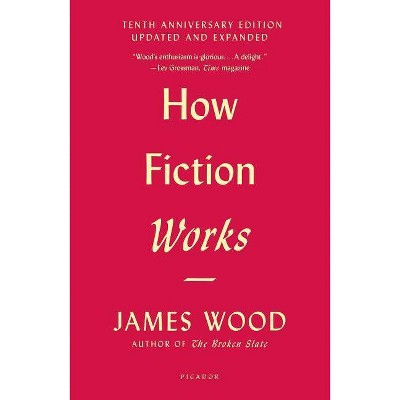
How Fiction Works (Tenth Anniversary Edition) - by James Wood (Paperback)
Similar Products

![Born This Way [Tenth Anniversary Edition] [LP] - VINYL](https://pisces.bbystatic.com/image2/BestBuy_US/images/products/3532/35325758_sa.jpg)


Products of same category from the store
All


Product info
<p/><br></br><p><b> Book Synopsis </b></p></br></br><p><b>10th anniversary revised edition with new Introduction </b> <p/><b>James Wood's<i> How Fiction Works</i> is a scintillating study of the magic of fiction--an analysis of its main elements and a celebration of its lasting power. </b> <p/>Here one of the most prominent and stylish critics of our time looks into the machinery of storytelling to ask some fundamental questions: What do we mean when we say we know a fictional character? What constitutes a telling detail? When is a metaphor successful? Is Realism realistic? Why do some literary conventions become dated while others stay fresh? <p/>James Wood ranges widely, from Homer to <i>Make Way for Ducklings</i>, from the Bible to John le Carré, and his book is both a study of the techniques of fiction-making and an alternative history of the novel. Playful and profound, <i>How Fiction Works</i> will be enlightening to writers, readers, and anyone else interested in what happens on the page.</p><p/><br></br><p><b> Review Quotes </b></p></br></br><br><p><b>A <i>San Francisco Chronicle</i> Top 50 Best Nonfiction Book of the Year<br>Named a Best Book of the Year by <i>The Economist</i>, <i>The Kansas City Star</i>, <i>Library Journal</i></b> <p/>" An articulate reminder of the framework that is essential to constructing a lasting work of the<br>imagination." --<i>The Miami Herald</i> <p/>" Wood's arranging of source material to prove his points is as fluid and lovely as any great composer's arrangement of musical notes, and, if nothing else, <i>How Fiction Works</i> will inspire you to simply read more . . . [A] lovely, eloquent ode to reading." --<i>The Oregonian</i> <p/>" This admirable book is, among other things, a successful attempt to replace E. M. Forster's <i>Aspects<br>of the Novel</i> as an accessible guide to the mechanics of fiction. Without losing sight of its promise to address the common reader rather than the specialist, <i>How Fiction Works</i> is much more sophisticated than Forster's book . . . Wood has thought keenly and profitably about such matters. He also benefits, as Forster did not, from wide reading in contemporary fiction." --Frank Kermode, <i>The New Republic</i> <p/>"<i>How Fiction Works</i> should delight and enlighten practicing novelists, would-be novelists, and all passionate readers of fiction . . . Enchanting." --<i>The Economist</i> <p/>"Wood's enthusiasm is glorious . . . A delight . . . The pleasure in this book lies in watching Wood read." --Lev Grossman, <i>Time</i> <p/>"An articulate reminder of the framework that is essential to constructing a lasting work of the imagination." --<i>The Miami Herald</i> <p/>"Wood is among the few contemporary writers of great consequence . . . Reading Wood, no matter the book under review, provides enormous pleasure." --<i>Los Angeles Times</i> <p/>"Highly stimulating stuff--if it doesn't make you hug your bookcase gratefully, you're probably an incorrigible 'formalist-cum-structuralist.' " --<i>Kirkus Reviews</i> <p/>"Through Wood's close, mostly loving, frequently funny, occasionally dizzying examination, our reading experience is amplified and enriched . . . Wood's wit and occasional hilarious commentary are well timed and sizzlingly accurate." --<i>Virginia Quarterly Review</i> <p/>" By examining the minutiae of character, narrative, and style in a range of fictional works that starts with the Bible and ends with Coetzee and Pynchon, he fondly and delicately pieces back together what the deconstructors put asunder." --<i>The Guardian</i> (UK) <p/>"A fiercely committed critic and consummate stylist." --John Banville, <i>The New York Review of Books</i> <p/>"A perceptive and graceful essay which almost anybody who's interested in books could read . . . Well worth reading." --<i>The Sunday Times</i> (UK)</p><br><p/><br></br><p><b> About the Author </b></p></br></br><b>JAMES WOOD</b> is a staff writer at <i>The New Yorker </i>and a visiting lecturer at Harvard. He is the author of two essay collections, <i>The Broken Estate </i>and <i>The Irresponsible Self</i>, and a novel, <i>The Book Against God</i>.
Price History
Price Archive shows prices from various stores, lets you see history and find the cheapest. There is no actual sale on the website. For all support, inquiry and suggestion messages communication@pricearchive.us