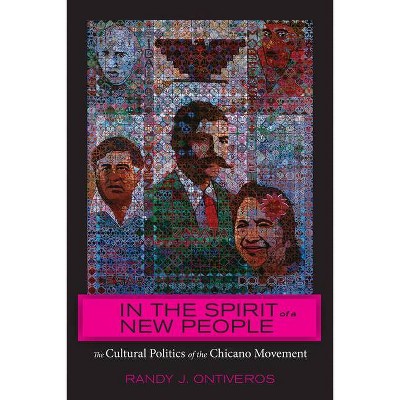
In the Spirit of a New People - (American Literatures Initiative) by Randy J Ontiveros (Paperback)
Similar Products






Products of same category from the store
All


Product info
<p/><br></br><p><b> About the Book </b></p></br></br>"Reexamining the Chicano civil rights movement of the 1960s and 1970s, In the Spirit of a New People brings to light new insights about social activism in the twentieth-century and new lessons for progressive politics in the twenty-first. Randy J. Ontiveros explores the ways in which Chicano/a artists and activists used fiction, poetry, visual arts, theater, and other expressive forms to forge a common purpose and to challenge inequality in America."--<p/><br></br><p><b> Book Synopsis </b></p></br></br>Next of Kin</em><p/><br></br><p><b> Review Quotes </b></p></br></br><br>[]In the Spirit of a New Peoplesucceeds in its argument for recuperating elements of Chicana/o cultural nationalism from the 1960s and the 1970s as it was and continues to be embedded in Chicana/o art as a framework and impetus for contemporary Chicana/o political action in the present.-- "MELUS"<br><br>Elegantly demonstrates the Chicano movement's irrefutable influenceona politically astute and enduring legacy of expressive culture. Randy J.Ontiverospersuasively argues thatmovimiento-inspired art and literature offer a crucial dose of historical consciousness required for sustaining struggles for social justice. A game-changing intervention in Chicano/a and American studies, Ontiveross book moves us beyond reductionist claims and rehashed debates to reinvigorate Chicano movement scholarship.--Richard T. Rodriguez, author of Next of Kin: The Family in Chicano/a Cultural Politics<br><br>In the Spirit of a New People provides a thoughtful analysis of how the Chicano movementand social justice struggles more generallycan influence politics and culture.-- "The Journal of American History"<br><br>The books strengths lie in its reading of cultural texts, especially the visual work of Barraza; performances of El Teatro Campesino; and the writing of Cisneros, Rodolfo & Corky Gonzales, Enriqueta Vasquez, and others. Analyses of these varied works offer compelling support for Ontiveross larger argument that at least culturally the Chicano movement & didnt die at all. Contextualized in a broader history that dates to the Mexican Revolution of 1910, these examples provide persuasive evidence for the movements legacy beyond just demographic and electoral politics.-- "The Journal of American History"<br>
Price History
Price Archive shows prices from various stores, lets you see history and find the cheapest. There is no actual sale on the website. For all support, inquiry and suggestion messages communication@pricearchive.us