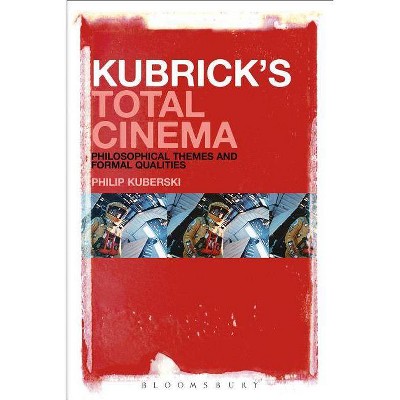
Kubrick's Total Cinema - by Philip Kuberski (Paperback)
Similar Products



Products of same category from the store
All





Product info
<p/><br></br><p><b> About the Book </b></p></br></br><p>An original study of Kubrick's philosophical themes and cinematic qualities: time, light, speech, music, poiesis, corporeality, war, eros, technology, and transcendence.</p><p/><br></br><p><b> Book Synopsis </b></p></br></br>Whatever people think about Kubrick's work, most would agree that there is something distinctive, even unique, about the films he made: a coolness, an intellectual clarity, a critical edginess, and finally an intractable ambiguity. In an attempt to isolate the Kubrick difference, this book treats Kubrick's films to a conceptual and formal analysis rather than a biographical and chronological survey.<br/><br/>As Kubrick's cinema moves between the possibilities of human transcendence dramatized in 2001: A Space Odyssey and the dismal limitations of human nature exhibited in A Clockwork Orange, the filmmaker's style "de-realizes" cinematic realism while, paradoxically, achieving an unprecedented frankness of vision and documentary and technical richness. The result is a kind of vertigo: the audience is made aware of both the de-realized and the realized nature of cinema. As opposed to the usual studies providing a summary and commentary of individual films, this will be the first to provide an analysis of the "elements" of Kubrick's total cinema.<p/><br></br><p><b> About the Author </b></p></br></br><p><b>Philip Kuberski</b> is Professor of English at Wake Forest University and the author of three books and a number of essays on modern literature and its relations to science, technology, and mythology.</p>
Price History
Price Archive shows prices from various stores, lets you see history and find the cheapest. There is no actual sale on the website. For all support, inquiry and suggestion messages communication@pricearchive.us