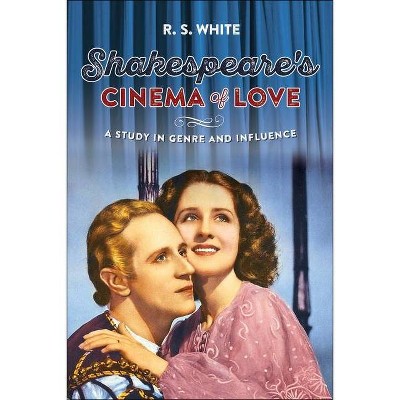
Shakespeare's Cinema of Love - by R S White (Paperback)
Similar Products


Products of same category from the store
All






Product info
<p/><br></br><p><b> About the Book </b></p></br></br><i>Shakespeare's cinema of love</i> addresses the question, how much has Shakespeare influenced modern film genres? Convincing arguments are made for the links between his comedies of love and genres such as 'screwball' comedy, musicals, romantic comedy and tragic love films.<p/><br></br><p><b> Book Synopsis </b></p></br></br><p>This engaging and stimulating book argues that Shakespeare's plays significantly influenced movie genres in the twentieth century, particularly in films concerning love in the classic Hollywood period. Shakespeare's 'green world' has a close functional equivalent in 'tinseltown' and on 'the silver screen', as well as in hybrid genres in Bollywood cinema. Meanwhile, <em>Romeo and Juliet </em>continues to be an enduring source for romantic tragedy on screen. The nature of generic indebtedness has not gained recognition because it is elusive and not always easy to recognise. The book traces generic links between Shakespeare's comedies of love and screen genres such as romantic comedy, 'screwball' comedy and musicals, as well as clarifying the use of common conventions defining the genres, such as mistaken identity, 'errors', disguise and 'shrew-taming'. This challenging and entertaining book will appeal to those interested in Shakespeare, movies and the representation of love in narratives.</p><p/><br></br><p><b> From the Back Cover </b></p></br></br>This engaging and stimulating book argues that Shakespeare's plays significantly influenced movie genres in the twentieth century, particularly in films concerning love in the classic Hollywood period and also in the hybrid genres of Bollywood cinema. Shakespeare's 'green world' has a close functional equivalent in 'tinseltown' and on 'the silver screen', as do disguise, cross-dressing, 'errors' and 'shrew taming'. Meanwhile, <i>Romeo and Juliet </i>continues to be an enduring, powerful source for romantic tragedy and melodrama on screen. The nature of such generic influence has not gained recognition because it is not always easy to recognise or describe; it occurs not only in explicitly referenced Shakespearean film adaptations but more broadly, and the kind of indebtedness is elusive and difficult to pin down. This book traces generic links between Shakespeare's comedies of love and screen genres such as romantic comedy, 'screwball' comedy and musicals, as well as clarifying the use of common conventions defining the genres. The 'Romeo-and-Juliet genre' in movies has a chapter to itself. An extra contribution lies in an enhanced understanding of the way literary and dramatic genres interpenetrate with the history of cinema through complex avenues of cultural transmission and adaptation. More generally, we can see where our modern conceptions of love have come from and how Shakespearean assumptions have been assimilated into the most popular mass media of the twentieth and twenty-first centuries. Speculative, challenging, informative and entertaining, the book will be of interest to enthusiasts of Shakespeare, cinema and the representation of love in narratives.<p/><br></br><p><b> Review Quotes </b></p></br></br><br><br>R.S. White's timely book on the influence of Shakespeare on Hollywood cinema offers a refreshing account of the 'contestatory and symbiotic' relationship between Shakespeare's generic innovations and the development of cinematic genres in early Hollywood. - David McInnis, Australian Book Review<br>June 2017 <br><p></p><br><br><p/><br></br><p><b> About the Author </b></p></br></br><br>R. S. White is Winthrop Professor of English at the University of Western Australia and Chief Investigator at the Australian Research Council Centre of Excellence for the History of Emotions 1100-1800<br>
Price History
Price Archive shows prices from various stores, lets you see history and find the cheapest. There is no actual sale on the website. For all support, inquiry and suggestion messages communication@pricearchive.us