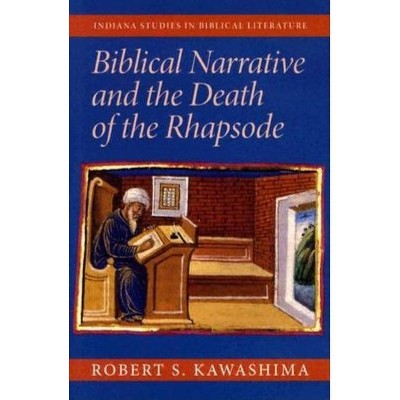
Biblical Narrative and the Death of the Rhapsode - (Biblical Literature) by Robert S Kawashima (Hardcover)
Similar Products




Products of same category from the store
All








Product info
<p/><br></br><p><b> About the Book </b></p></br></br>Beyond this strictly historical thesis, the study has theoretical implications for the study of narrative, literature, and oral tradition.Indiana Studies in Biblical Literature--Herbert Marks, General Editor<p/><br></br><p><b> Book Synopsis </b></p></br></br><p>Informed by literary theory and Homeric scholarship as well as biblical studies, Biblical Narrative and the Death of the Rhapsode sheds new light on the Hebrew Bible and, more generally, on the possibilities of narrative form. Robert S. Kawashima compares the narratives of the Hebrew Bible with Homeric and Ugaritic epic in order to account for the "novelty" of biblical prose narrative. Long before Herodotus or Homer, Israelite writers practiced an innovative narrative art, which anticipated the modern novelist's craft. Though their work is undeniably linked to the linguistic tradition of the Ugaritic narrative poems, there are substantive differences between the bodies of work. Kawashima views biblical narrative as the result of a specifically written verbal art that we should counterpose to the oral-traditional art of epic. Beyond this strictly historical thesis, the study has theoretical implications for the study of narrative, literature, and oral tradition.</p><p>Indiana Studies in Biblical Literature-Herbert Marks, General Editor</p><p/><br></br><p><b> Review Quotes </b></p></br></br><br><p>For many years now, biblical scholars have studied the literary qualities of the ancient texts. Adding astute insights to those of pioneering scholar Robert Alter, Kawashima (New York Univ.) offers a comparative study of Greek mythology and the Hebrew Bible, probing their relationship and looking at what the stories have in common and what kind of knowledge is required to span the gulf between them. The author argues that the essential difference between these two Mediterranean-centered foundation stories lies in the fact that one was oral, the other written. Part of the oral tradition, the Greek tales were recited on ceremonial occasions by a rhapsode (bardic minstrel), whose delivery depended on memory and personal style; each performance was novel and subjective. The biblical narratives, which tradition has it were brought back to the Holy Land from Babylonian exile by priest/scribe Ezra, were written texts that were read sequentially at public assemblies. Law prohibited change in the texts and thus fidelity marks their particular verbal art. Kawashima illuminates the two forms' literary elements--narrative, dialogue, repetition, characterization--as they have evolved into modern literature. This is a meticulously researched study, both demanding and rewarding. Summing Up: Highly recommended. Upper--division undergraduates and above.July 2005</p>--M. Butovsky "emeritus, Concordia University"<br><p/><br></br><p><b> About the Author </b></p></br></br><p>Robert S. Kawashima is Dorot Assistant Professor and Faculty Fellow in the Skirball Department of Hebrew and Judaic Studies at New York University.</p>
Price History
Price Archive shows prices from various stores, lets you see history and find the cheapest. There is no actual sale on the website. For all support, inquiry and suggestion messages communication@pricearchive.us