Exploring the Ecology of World Englishes in the Twenty-First Century - by Pam Peters & Kate Burridge (Hardcover)
Similar Products






Products of same category from the store
All







Product info
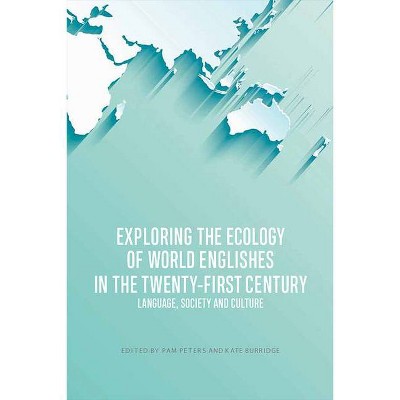
<p/><br></br><p><b> About the Book </b></p></br></br><p>Highlights the adaptability of English in contact with other languages, cultures and societies and in diverse regional habitats.</p><p/><br></br><p><b> Book Synopsis </b></p></br></br><p>The book's ecological perspective offers a fresh theoretical framework for analysing both outer- and inner-circle Englishes. It investigates the varieties of English spoken as a second language, by bi- or multilingual speakers in South Africa, India, Singapore, Hong Kong and the Philippines, and by some lesser-known oceanic varieties in Micronesia and Polynesia, revealing the remarkable divergences in the use of common English elements across geographical distances. Tapping into current debates about colonial legacies and decolonization, as well as ongoing concerns about democracy, regional power and globalisation, this book explores a range of fresh evidence to discuss language variation across the globe.</p><p/><br></br><p><b> From the Back Cover </b></p></br></br>This collection highlights the adaptability of English in contact with other languages, cultures and societies in diverse regional habitats. The book's ecological perspective offers a fresh theoretical framework for analysing both outer- and inner-circle Englishes. It investigates the varieties of English spoken as a second language, by bi- or multilingual speakers in South Africa, India, Singapore, Hong Kong and the Philippines, and by some lesser-known oceanic varieties in Micronesia and Polynesia, revealing the remarkable divergences in the use of common English elements across geographical distances. Tapping into current debates about colonial legacies and decolonization, as well as ongoing concerns about democracy, regional power and globalisation, this book explores a range of fresh evidence to discuss language variation across the globe. Key features: - Examines features of world Englishes in their sociocultural contexts - Structurally appraises lexical and constructional innovations in English - Presents fresh empirical evidence to discuss language variation Pam Peters is Emeritus Professor in Linguistics at Macquarie University, Sydney Kate Burridge is Professor of Linguistics at Monash University, Melbourne<p/><br></br><p><b> About the Author </b></p></br></br><p>Pam Peters is Emeritus Professor at Macquarie University and a Fellow of the Australian Academy of the Humanities (FAHA). <p>Kate Burridge is Professor of Linguistics at Monash University<p>
Price History
Price Archive shows prices from various stores, lets you see history and find the cheapest. There is no actual sale on the website. For all support, inquiry and suggestion messages communication@pricearchive.us