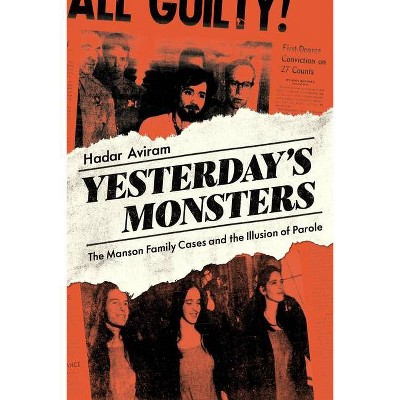
Yesterday's Monsters - by Hadar Aviram (Paperback)
Similar Products




Products of same category from the store
All





Product info
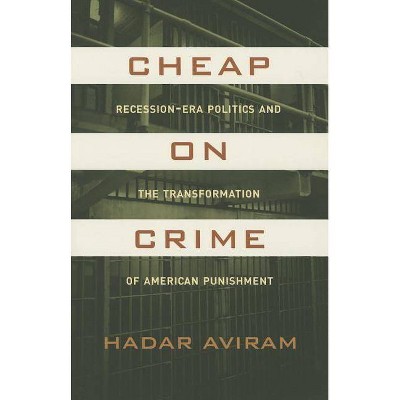
<p/><br></br><p><b> About the Book </b></p></br></br>"In 1969, the world was shocked by several murders committed by Charles Manson and his followers. Although the defendants were sentenced to death in 1971, their sentences were commuted to life with parole in 1972; since 1978, they have been regularly attending parole hearings. So far, all of the living defendants remain behind bars. Relying on nearly fifty years' worth of parole hearing transcripts, as well as interviews and archival materials, [this book] invites readers into the opaque world of the California parole process--a realm of almost unfettered administrative discretion, prison programming inadequacies, and political pressures--and offers a fresh longitudinal perspective on extreme punishment"--<p/><br></br><p><b> Book Synopsis </b></p></br></br><p>In 1969, the world was shocked by a series of murders committed by Charles Manson and his "family" of followers. Although the defendants were sentenced to death in 1971, their sentences were commuted to life with parole in 1972; since 1978, they have been regularly attending parole hearings. Today all of the living defendants remain behind bars. <p/> Relying on nearly fifty years of parole hearing transcripts, as well as interviews and archival materials, Hadar Aviram invites readers into the opaque world of the California parole process--a realm of almost unfettered administrative discretion, prison programming inadequacies, high-pitched emotions, and political pressures. <i>Yesterday's Monsters</i> offers a fresh longitudinal perspective on extreme punishment.</p><p/><br></br><p><b> From the Back Cover </b></p></br></br>"An underappreciated contributor to mass incarceration has been the politicizing of the parole process, particularly for violent offenses. Through an insightful analysis of the Manson Family experience, Hadar Aviram illuminates how these high-profile cases helped institutionalize a system of extreme, often counterproductive, punishments that have transformed our conception of parole."--Marc Mauer, executive director of the Sentencing Project <p/> "Filling an enormous vacuum in the literature, Aviram draws on fifty years of transcripts showcasing the Board of Parole Hearings' interviews of the Manson Family members. Her book lucidly conveys how the magnitude of their crimes functioned as a crucial catalyst for statutory changes that measurably harshened criminal penalties while narrowing the prospects for parole release in the ensuing decades."--Edward E. Rhine, Robina Institute of Criminal Law and Criminal Justice, University of Minnesota Law School <p/> "<i>Yesterday's Monsters</i> is three remarkable books at once: a compelling work of late twentieth-century social history, a sober and scholarly analysis of the flaws in our parole system, and an enlightened program for sensible reform."--Robert Weisberg, Professor of Law, Stanford University <p/><p/><br></br><p><b> Review Quotes </b></p></br></br><br><p>"Aviram's book is a significant contribution to the academic literature discussing the social aspects of punishment in late 20th century America, but even more importantly, it is an imperative addition to discretionary parole research, which requires much more attention."</p>-- "Criminal Law and Criminal Justice Books"<br><br>"As California rethinks the roles of imprisonment and parole in this COVID-19, post-Three Strikes era, <i>Yesterday's Monsters</i> has some lessons for today." <p/> -- "San Francisco Chronicle"<br><br>"Does a time arrive when actors in even a truly heinous crime merit parole? . . . Aviram's readable, astute, and discerning parsing makes this a provocative examination of this under-investigated issue."-- "CHOICE"<br><br>"Aviram delves into the world of the California parole process, finding almost unfettered administrative discretion, prison programming inadequacies, high-pitched emotions, and political pressures."-- "Law & Social Inquiry"<br><p/><br></br><p><b> About the Author </b></p></br></br><p><b>Hadar Aviram</b> is Thomas Miller Professor of Law at the University of California Hastings College of the Law. She is the author of <i>Cheap on Crime: Recession-Era Politics and the Transformation of American Punishment </i>and a coeditor of <i>The Legal Process and the Promise of Justice. </i>She is a frequent media commentator and runs the <i>California Correctional Crisis</i> blog.</p>
Price History
Cheapest price in the interval: 29.99 on October 23, 2021
Most expensive price in the interval: 29.99 on November 8, 2021
Price Archive shows prices from various stores, lets you see history and find the cheapest. There is no actual sale on the website. For all support, inquiry and suggestion messages communication@pricearchive.us