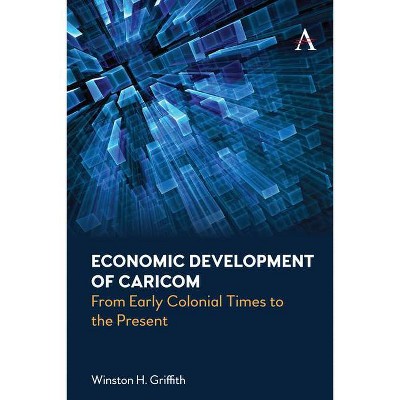
Economic Development of Caricom - by Winston H Griffith (Hardcover)
Similar Products





Products of same category from the store
All








Product info
<p/><br></br><p><b> About the Book </b></p></br></br><p>The book seeks to determine why CARICOM nations, despite their incorporation into the international economy for four hundred years, have experienced little meaningful economic transformation.</p><p/><br></br><p><b> Book Synopsis </b></p></br></br><p>It has been suggested that, if CARICOM nations wish to accelerate their development, they should embrace laissez-faire economic policies. However, laissez-faire economic policies have reinforced the very economic and social structures that have contributed to their low level of development; furthermore, laissez-faire economic policies ignore social attitudes that can greatly influence a nation's development. Moreover, low-skilled labor-intensive production processes, which once propelled growth in CARICOM nations, will no longer perform a similar role because production processes are becoming more and more knowledge-skills intensive, and nations wishing to attract foreign manufacturing investment or high-tech services may not be able to do so without an adequate pool of the necessary knowledge skills. CARICOM nations must therefore try to accumulate a pool of knowledge skills that can help their economies become internationally competitive.</p><p/><br></br><p><b> About the Author </b></p></br></br><p>Winston H. Griffith, Professor Emeritus, taught economic development, political economy of the Caribbean, international economics, and international finance at Bucknell University.</p>
Price History
Price Archive shows prices from various stores, lets you see history and find the cheapest. There is no actual sale on the website. For all support, inquiry and suggestion messages communication@pricearchive.us