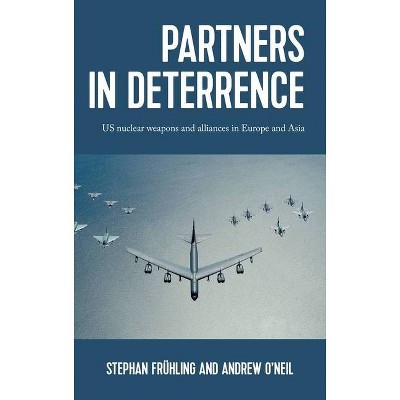
Partners in Deterrence - by Stephan Frühling & Andrew O'Neil (Hardcover)
Similar Products





Products of same category from the store
All






Product info
<p/><br></br><p><b> About the Book </b></p></br></br>The book explains how and why nuclear weapons cooperation between the US and its allies has evolved since the 1950s. By bringing institutional perspectives to the study of how alliances operate, it focuses on the objectives and sources of influence of US allies in Europe and Asia as they cooperate with the US on the world's most powerful weapons.<p/><br></br><p><b> Book Synopsis </b></p></br></br><p>From the dawn of the atomic age to today, nuclear weapons have been central to the internal dynamics of US alliances in Europe and Asia. But nuclear weapons cooperation in US alliances has varied significantly between allies and over time. </p><p><em>Partners in deterrence</em> explores the history of America's nuclear posture worldwide, delving into alliance structures and interaction during and after the Cold War to uncover the underlying dynamics of nuclear weapons cooperation between the US and its allies. Combining in-depth empirical analysis with an accessible theoretical lens, the book reveals that US allies have wielded significant influence in shaping nuclear weapons cooperation with the US in ways that reflect their own, often idiosyncratic, objectives. Alliances are ecosystems of exchange rather than mere tools of external balancing, Frühling and O'Neil argue, and institutional perspectives can offer an unprecedented insight into how structured cooperation can promote policy convergence.</p><p/><br></br><p><b> From the Back Cover </b></p></br></br>'This important new study combines historical research, political science, and policy analysis to generate valuable new insights into past and present practices in both Europe and Asia and thereby lays the foundation for future policy development.' Brad Roberts, Director of the Center for Global Security Research at Lawrence Livermore National Laboratory, California '<i>Partners in deterrence </i>offers a fresh perspective on an enduring question: what motivates states to form nuclear alliances? As US alliances in Europe and Asia face growing nuclear threats, strategists would be well-served to understand what brings in security partners - and what helps them stay. By going beyond the traditional fixation on proximate security threats as the main driver of nuclear alliances, the book widens the aperture of contemporary debates, providing a valuable perspective for academics and policymakers alike.' Matthew Kroenig, Professor of Government and Foreign Service at Georgetown University and the author of <i>The Logic of American Nuclear Strategy</i> From the dawn of the atomic age to today, nuclear weapons have been central to the internal dynamics of US alliances in Europe and Asia. But nuclear weapons cooperation in US alliances has varied significantly between allies and over time. <i>Partners in deterrence </i>explores the history of America's nuclear posture worldwide, delving into alliance structures and interaction during and after the Cold War to uncover the underlying dynamics of nuclear weapons cooperation between the US and its allies. Combining in-depth empirical analysis with an accessible theoretical lens, the book reveals that US allies have wielded significant influence in shaping nuclear weapons cooperation with the US in ways that reflect their own, often idiosyncratic, objectives. Alliances are ecosystems of exchange rather than mere tools of external balancing, Frühling and O'Neil argue, and institutional perspectives can offer an unprecedented insight into how structured cooperation can promote policy convergence.<p/><br></br><p><b> Review Quotes </b></p></br></br><br>'Long a footnote to US nuclear strategy, extended deterrence is rising in salience and urgency as the United States and its allies contend with a deteriorating security environment. This important new study combines historical research, political science, and policy analysis to generate valuable new insights into past and present practices in both Europe and Asia and thereby lays the foundation for future policy development.' Brad Roberts, Director of the Center for Global Security Research at Lawrence Livermore National Laboratory, California '<i>Partners in deterrence </i>offers a fresh perspective on an enduring question: what motivates states to form nuclear alliances? As US alliances in Europe and Asia face growing nuclear threats, strategists would be well-served to understand what brings in security partners - and what helps them stay. This book makes a valuable contribution, blending classic theory with meticulous examination of well-selected case studies to explain contemporary nuclear alliances. By going beyond the traditional fixation on proximate security threats as the main driver of nuclear alliances, the book widens the aperture of contemporary debates, providing a valuable perspective for academics and policymakers alike.' Matthew Kroenig, Professor of Government and Foreign Service at Georgetown University and the author of <i>The Logic of American Nuclear Strategy</i><br><p/><br></br><p><b> About the Author </b></p></br></br>Stephan Frühling is Professor in the Strategic and Defence Studies Centre and Deputy Dean of the College of Asia & the Pacific at Australian National University Andrew O'Neil is Dean and Professor of Political Science in the Griffith Business School, Griffith University
Price History
Price Archive shows prices from various stores, lets you see history and find the cheapest. There is no actual sale on the website. For all support, inquiry and suggestion messages communication@pricearchive.us