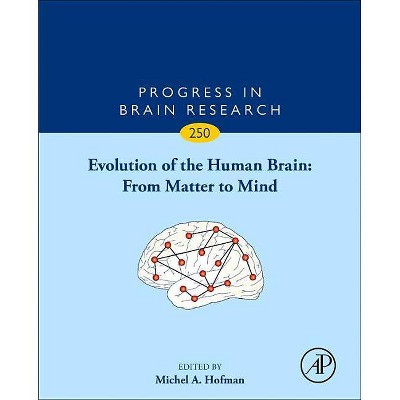
Evolution of the Human Brain: From Matter to Mind, 250 - (Progress in Brain Research) (Hardcover)
Similar Products



Products of same category from the store
All










Product info
<p/><br></br><p><b> Book Synopsis </b></p></br></br><p><i>Evolution of the Human Brain: From Matter to Mind, Volume 250 </i>in the <i>Progress in Brain Research, </i> series documents the latest developments and insights about the origin and evolution of the human brain and mind. Specific sections in this new release include Evolution and development of the human cerebral cortex, Functional connectivity of the human cerebral cortex, Lateralization of the human cerebral cortex, Life history strategies and the human cerebral cortex, Evolution of the modern human brain, On the nature and evolution of the human mind, Origin and evolution of human cognition, Origin and evolution of human consciousness, and more. <p/><br></br><p><b> Review Quotes </b></p></br></br><br>Editor Michel A. Hofman provides a thoughtful examination of the evolution of the human brain. The book is divided topically into the following subjects: development and evolution of the human cortex, functional connectivity of the human cortex, the nature and evolution of the human mind, origin and evolution of human cognition, and consciousness. Each of these topics is covered in several chapters that review theories and application. Special attention is paid to Darwinian evolutionary theory in many of the chapters in order to better explain the modern human brain. There are instances in the book where there are acronyms that are introduced without warning the reader, which may be due some of the authors expecting the readers to have a certain level of familiarity with the research that is presented. For example, when discussing different structures in the brain, they would utilize the acronym for that brain structure first before introducing that area. Neuropsychology trainees will experience some familiarity with the information presented throughout the book, akin to what they have learned in their various neuroscience/neuropsychology classes. The chapters discussing the development of neurodevelopmental disorders, consciousness in children, metacognition, gaze following, problem solving, and human cognition are applicable to both neuropsychology trainees and practicing neuropsychologists. <b>--Keshia M. Sanders, Ph.D.</b><br>
Price History
Price Archive shows prices from various stores, lets you see history and find the cheapest. There is no actual sale on the website. For all support, inquiry and suggestion messages communication@pricearchive.us