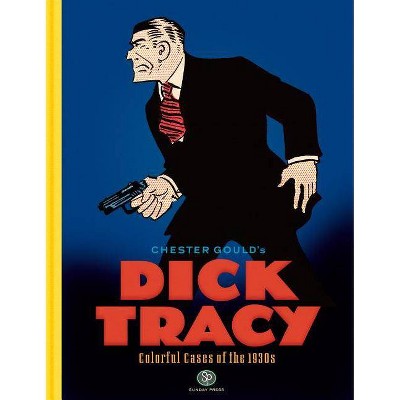
Dick Tracy: Colorful Cases of the 1930s - by Chester Gould (Hardcover)
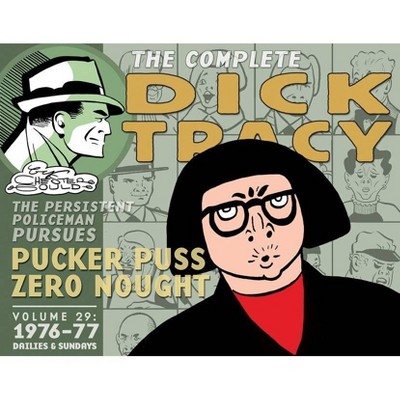
Similar Products
![Dick Tracy [Blu-ray] [1990]](https://pisces.bbystatic.com/image2/BestBuy_US/images/products/4802/4802108_so.jpg)




Products of same category from the store
All





Product info
<p/><br></br><p><b> Book Synopsis </b></p></br></br>Experience the adventures of the world's most famous comic strip detective just as they appeared when originally published. <p/>In the early 1930s, Chester Gould dramatically altered the comics landscape with a new style of gritty realism torn from Chicago's headlines and fueled by the hard-hitting gangster films of the era. And with this new kind of storytelling came a new way of coloring comics, with strong, solid blacks and primary colors, a style as bold and vibrant as the stories themselves. Now, to fully appreciate Chester Gould's incredible artwork and storytelling, Sunday Press has reprinted these comics for the first time in the original colors, fully restored and in full tabloid size. <p/>This selection of <i>Dick Tracy</i> Sunday pages from 1931 to 1939 features Gould's most infamous villains of the decade, with four complete stories, plus forty more fabulous Sundays highlighting the villains and heroes not seen in the featured cases. Each of these sections features detailed commentary by Tracy historian Garyn G. Roberts. The high-quality, hardbound volume was produced in collaboration with the Chester Gould-Dick Tracy Museum. <p/> WINNER: Will Eisner Award, 2017: Best Archival Collection/Project--Strips<p/><br></br><p><b> Review Quotes </b></p></br></br><br>The stunning new collection from the esteemed Sunday Press, <i>Dick Tracy: Colorful Cases of the 1930s</i>, explores Gould's first decade of four-color powder burn nightmares. Reprinted for the first time in their original sizes and colors, these impeccably restored pages brand into the brain unforgettable images. . . --Paul Tumey, <i>The Comics Journal</i><br><p/><br></br><p><b> About the Author </b></p></br></br><b>Chester Gould</b> (1900-1985) was born in Pawnee, Oklahoma, the son of a newspaperman and grandson of a circuit-riding preacher. He attended Oklahoma A&M (now Oklahoma State University) before transferring to Northwestern University in Chicago, from which he graduated in 1923. He produced the minor comic strips <i>Fillum Fables</i> and <i>The Radio Catts</i> before striking it big with <i>Dick Tracy</i> in 1931. Originally titled <i>Plainclothes Tracy</i>, the rechristened strip became one of the most successful and lauded comic strips of all time, as well as a media and merchandising sensation. He was twice accorded the Cartoonist of the Year Reuben Award by his peers. Gould continued to write and illustrate <i>Dick Tracy</i> until his retirement in 1977.
Price History
Price Archive shows prices from various stores, lets you see history and find the cheapest. There is no actual sale on the website. For all support, inquiry and suggestion messages communication@pricearchive.us