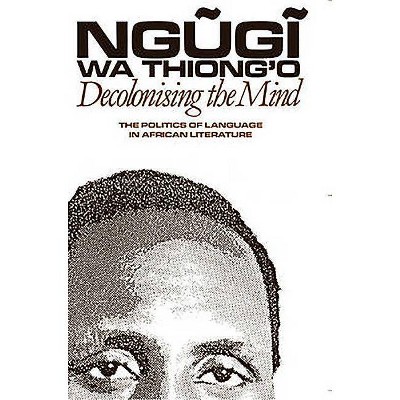
Decolonising the Mind - (Studies in African Literature (Paperback)) by Ngugi Wa Thiong'o (Paperback)
Similar Products
Products of same category from the store
All




Product info
<p/><br></br><p><b> About the Book </b></p></br></br>Ngugi wrote his first novels and plays in English but was determined, even before his detention without trial in 1978, to move to writing in Gikuyu.<p/><br></br><p><b> Book Synopsis </b></p></br></br>Ngugi describes this book as 'a summary of some of the issues in which I have been passionately involved for the last twenty years of my practice in fiction, theatre, criticism and in teaching of literature.'<br/><br/>East Africa [Kenya, Tanzania, Uganda and Rwanda]: EAEP<p/><br></br><p><b> Review Quotes </b></p></br></br><br>... after 25 years of independence, there is beginning to emerge a generation of writers for whom colonialism is a matter of history and not of direct personal experience. In retrospect that literature characterised by Ngugi as Afro-European - the literature written by Africans in European languages - will come to be seen as part and parcel of the uneasy period between colonialism and full independence, a period equally reflected in the continent's political instability as it attempts to find its feet. Ngugi's importance - and that of this book - lies in the courage with which he has confronted this most urgent of issues. ---Adewale Maja-Pearce "THE NEW STATESMAN "<br><br>Many of the ideas are familiar from Ngugi's earlier critical books, and earlier lectures, elsewhere. But the material here has a new context and the ideas a new focus. This leading African writer presents the arguments for using African language and forms after successfully using an African language himself. ---Anne Walmsley "THE GUARDIAN "<br>
Price History
Price Archive shows prices from various stores, lets you see history and find the cheapest. There is no actual sale on the website. For all support, inquiry and suggestion messages communication@pricearchive.us