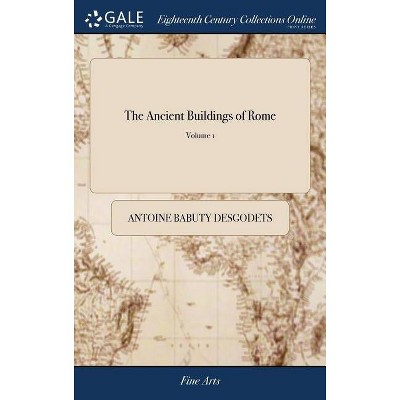
The Ancient Buildings of Rome - by Antoine Babuty Desgodets (Hardcover)
Similar Products


![Ancient Rome [LP] - VINYL](https://pisces.bbystatic.com/image2/BestBuy_US/images/products/3061/30614922_sa.jpg)


Products of same category from the store
All








Product info
<p/><br></br><p><b> Book Synopsis </b></p></br></br>The 18th century was a wealth of knowledge, exploration and rapidly growing technology and expanding record-keeping made possible by advances in the printing press. In its determination to preserve the century of revolution, Gale initiated a revolution of its own: digitization of epic proportions to preserve these invaluable works in the largest archive of its kind. Now for the first time these high-quality digital copies of original 18th century manuscripts are available in print, making them highly accessible to libraries, undergraduate students, and independent scholars.<br />The eighteenth-century fascination with Greek and Roman antiquity followed the systematic excavation of the ruins at Pompeii and Herculaneum in southern Italy; and after 1750 a neoclassical style dominated all artistic fields. The titles here trace developments in mostly English-language works on painting, sculpture, architecture, music, theater, and other disciplines. Instructional works on musical instruments, catalogs of art objects, comic operas, and more are also included. <br />++++<br />The below data was compiled from various identification fields in the bibliographic record of this title. This data is provided as an additional tool in helping to insure edition identification: <br />++++<br />National Library of Scotland<br /><br />N030175<br /><br />Parallel French and English texts, with added titlepages in French, the first dated 1771, that read: Edifices antiques de Rome. First published in 1682.<br /><br />London: printed for I. and J. Taylor, 1795. 2v., plates; 2°
Price History
Price Archive shows prices from various stores, lets you see history and find the cheapest. There is no actual sale on the website. For all support, inquiry and suggestion messages communication@pricearchive.us