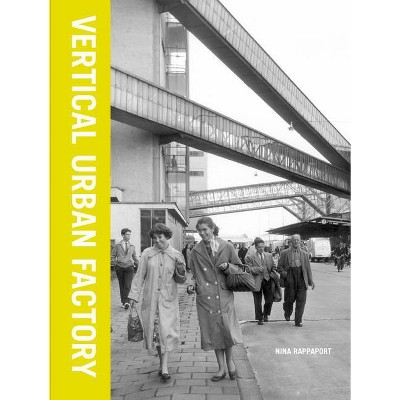
Vertical Urban Factory - 2nd Edition by Nina Rappaport (Paperback)
Similar Products








Products of same category from the store
All









Product info
<p/><br></br><p><b> About the Book </b></p></br></br>This book focuses on the spaces of production in cities that are significant in their design and contribute to a vital urban environment. This book reexamines the modernist and contemporary factory, along with labor issues in the city and the impact of globalization through the lens of an urbanist, while provoking future scenarios for urban manufacturing. It shows now factories are cleaner and greener, smaller and taller, hybrid and flexible, they can be reintegrated in city life, creating a new paradigm for a sustainable, mixed-use, and more self-sufficient industrial urbanism.<p/><br></br><p><b> Book Synopsis </b></p></br></br>This revised edition focuses on the spaces of production in cities--both the modernist period and today--and the technologies that have contributed to shifts in factory architecture, manufacturing, and urban design. Vertical Urban Factory tracks the evolution of the vertical urban factory from the first industrial revolution to the present and provides an analysis of the political, social, and economic factors that have shaped today's global industrial landscape. Ultimately, it provokes new concepts for the futureof urban manufacturing, and the necessity of creating new paradigms for sustainable, self-sufficient urban industry. Illustrated with historic and contemporary photographs, manufacturing process diagrams, and infographics by MGMT Design.<p/><br></br><p><b> Review Quotes </b></p></br></br><br>Exceptionally well written, organized and presented, Vertical Urban Factory is an impressive work of seminal scholarship and an essential, core, and invaluable addition to professional, corporate, college, and university library Urban Studies collections and American Industrial Studies supplemental reading lists. --Carl Logan, Library Bookwatch<br><br>Now that architects see nothing but a global culture of consumerism, they need to pay more attention to the factories that feed it. Critic, curator, educator Nina Rappaport encapsulates in this book several years of investigations in architecture studios, her extensive consultations, and her exhibitions devoted to the "architectural, social, and spatial typologies" of factories since the rise of modern production around 1800. --C. W. Westfall, University of Notre Dame, Choice (American Library Association)<br><br>Rappaport describes the innovations in architecture, engineering, and manufacturing in the early 20th century that freed American factories from rural sites next to water-powered mills so they could rise in cities. The new urban factories created jobs and fostered density, at least until the 1960s, when industry be- gan to move to urban edges, suburbs, and, eventually, overseas. Rappaport also investigates how architects and urban designers, with new technologies and the demand for greener industries, today can create urban production facilities to revitalize cities. --Architectural Record<br><br>Rappaport is a connoisseur of the beauty and utilitarian design of urban factories. However, she does not simply advocate for the preservation and repurposing of urban factories, particularly vertical multi-storied factories. She advocates for the role of industry in dense urban environments going forward into the future. The book is organized in three sections: The Modern Factory, The Contemporary Factory, and The Future Factory. --Carol Berens, UrbDeZine<br>
Price History
Cheapest price in the interval: 38.49 on October 22, 2021
Most expensive price in the interval: 38.49 on November 8, 2021
Average price in period: 38.49
Price Archive shows prices from various stores, lets you see history and find the cheapest. There is no actual sale on the website. For all support, inquiry and suggestion messages communication@pricearchive.us