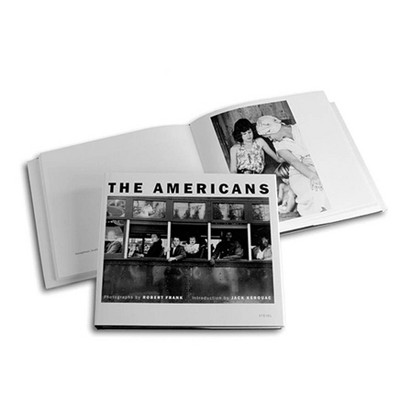
Robert Frank: The Americans - (Hardcover)
Similar Products


Products of same category from the store
All






Product info
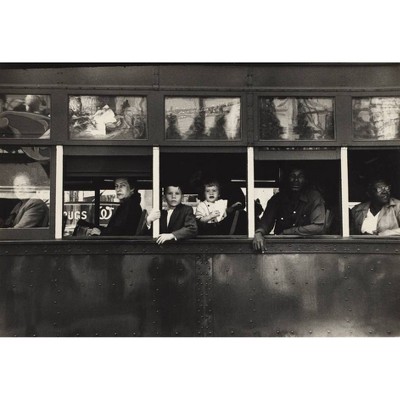
<p/><br></br><p><b> About the Book </b></p></br></br>Originally published in 1958, "The Americans" was part of a series of books that presented foreign countries through words and pictures. Frank personally supervised this latest edition that features a new cover as well as digitally enhanced images.<p/><br></br><p><b> Book Synopsis </b></p></br></br><p><strong>First published in France in 1958, then in the United States in 1959, Robert Frank's <i>The Americans</i> changed the course of 20th-century photography</strong></p>First published in France in 1958, then in the United States in 1959, Robert Frank's <i>The Americans</i> changed the course of twentieth-century photography. In 83 photographs, Frank looked beneath the surface of American life to reveal a people plagued by racism, ill-served by their politicians and rendered numb by a rapidly expanding culture of consumption. Yet he also found novel areas of beauty in simple, overlooked corners of American life. And it was not just Frank's subject matter--cars, jukeboxes and even the road itself--that redefined the icons of America; it was also his seemingly intuitive, immediate, off-kilter style, as well as his method of brilliantly linking his photographs together thematically, conceptually, formally and linguistically, that made <i>The Americans</i> so innovative. More of an ode or a poem than a literal document, the book is as powerful and provocative today as it was 56 years ago.<p/><br></br><p><b> Review Quotes </b></p></br></br><br>The photographs from his seminal book The Americans, which took a critical look at our nation's life in the 1950s, are timeless. His work continues to inspire new generations to follow his path to see what is invisible in America.-- "L'Oeil de la Photographie"<br><br>Each portrait tells its own story.--Arthur Lubow "New York Times"<br><br>...Robert Frank changed history with the 83 images that appeared in his stark breakthrough "<i>The Americans</i>.--Sam Whiting "SFGate"<br><br>[Frank] pioneered a whole new subject matter that we [now] define as icons: cars, jukeboxes, even the road itself.--Scott Indrisek "Artsy"<br><br>His work is revolutionary in showing an America that was not seen, but also creating a way of seeing in photography that was new, powerful and charged.--Ken Light "San Francisco Chronicle"<br><br>I can't think of a single living artist who has as secure a status in his or her chosen field, and I doubt there will be one for some time.--Jim Lewis "LitHub"<br><br>That is the miracle of great socially committed art: It addresses our sources of deepest unease, helps us to confront what we cannot organize or explain by making all of it unforgettable.--Nicholas Dawidoff "The New York Times Magazine"<br><br>The exhibition is as comprehensive as it is ephemeral featuring a wealth of photographs, all of Frank's books since 1947, and his films that he began focusing on in the early 1960s.--Lisa Contag "Artinfo"<br><br>The Americans challenged the presiding midcentury formula for photojournalism. Mr. Frank's photographs -- of lone individuals, teenage couples, groups at funerals and odd spoors of cultural life -- were cinematic, immediate, off-kilter and grainy, like early television transmissions of the period.--Philip Gefter "New York Times"<br>
Price History
Price Archive shows prices from various stores, lets you see history and find the cheapest. There is no actual sale on the website. For all support, inquiry and suggestion messages communication@pricearchive.us